BLOGGER TEMPLATES AND TWITTER BACKGROUNDS

Tuesday, May 18, 2010

one 2 five kenya


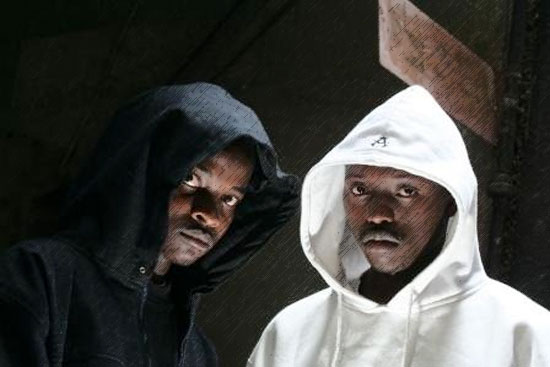
Live with Shenzy / Voice of the Underground (VOTU) is an urban radio show based on hip hop culture, hosted by MC Shenzy, a Nairobi, Kenya based hip hop activist/ mc/radio host and co-founder of the Rhyme FM website. In this latest episode of his show, MC Shenzy reports on his encounter with the new talents of 125 (One two five, named after the postal code of their neighbourhood Rongai). Listen to the show below.

Gaza, Chiz N Brain, Batata, Kdawg and MG: just to mention a few established emcees who graced the Live With Shenzy webcast in the past. Now to some new breed. I must confess though very few new emcees make it to my playlist, let alone the coveted killer interview.

Listen to Live with Shenzy featuring 125 (mostly in Swahili / Sheng):

Ladies and gentlemen, I take you to the future! This duo takes me back to days of legendary Kalamashaka classics Tafsiri and Ni Wakati, in other words timeless, conscious, tough, witty lyrics and the ill original flow and you got yourself classic records, well produced and you can tell from the hunger in their voice it’s from the soul. Just when i thought new mcs are leaning more towards battle side of the culture and forgetting the most important part, reppin for the people stuck in tyranny regime, poverty, police brutality, unemployment, tribalism, the youth, mothers, sisters, fathers and brothers. The true essence of hiphop and boom kwa face!!!

I met 125 (125th street). One thing that strikes you when you meet them is the laid back attitude, soft spoken peeps but ponder and you’ll know they got lots to say about the system, the people, the youth… the hip hop scene… you name it! You gotta give it to 125. These headz got hella skill, can write, the whole package fam and from “Live with Shenzy” A-PLUS mcs on mic, shelf life timeless… the lyrikal might is just too much. To y’all lazy so called legends and queens of shit gotta put yo thinkin’ caps on. Repackage yourselves or in a few you be nowhere in the scene… seen? Nuff said, amma let you catch the exclusive interview and you know where u heard em first: Live with Shenzy, this is what’s meant by havin’ your ears on street heard??!!! They are reppin for RONGAI na mats za huko ni 125… umenipata… gotten the ledge?

125 biography
125 is a conscious Kenyan Hip-Hop group that is striving to uplift Kenyan society through their soulful hip hop songs. The group is composed of two rappers: Dandan aka Babayao aka Falagan and Ray.

Dandan aka Babayao aka Falagan
Real Name: Dan Masika
What does he do besides music: Dan is a third year student at Kenya Polythenic University College studying Telecommunication and Engineering.
Career: Started writing lyrics in Primary. Formed a group in high school called “MASKWOTTA”, 2004 formed another group called “K-RO” that was based in Rongai. He has worked with Hirum & K-plan. Participated in K-2 talent search & Ibiza talent search a couple of years ago.
Influences: K-shaka (Vigeti/Johnny), Dead Prez, NAS, Mos Def, Talib Kweli, and Canibus
Likes: Listening to Hip-Hop, Beautiful women

Ray
Real Name: Ray Patrobas Nyamari
What does he do besides music: About to start a course in graphic designing. Previously did a course in IT but left half way through due to other interest.
Career: I started Rhyming in High school in form 3 but I had a very keen interest in music. He formed the group 125TH STREET together with Dan. Participated in Ibiza talent search and made it to the finals but unfortunately he didn’t clinch the prize. He has worked with Blue Zebra, Under Dawg, Ragz 2 Records, & K-plan studios.
Influences: Didge, Nas, Talib Kweli, Mos Def, Common, Jay-Z, Kanye West, Rakim, K-shaka, and mostly underground artists.
Likes: Hanging out with his boys, listening and writing Hip-Hop, Playing B-Ball, holain at fine honiez, watching movies and more.
Mission: To make real music that people can listen to anywhere, anytime
Vision
To create a positive vibe about Kenyan Hip-Hop, make people acknowledge & believe that Hip-Hop can uplift our society!
Label: Iconic Music Kenya

Website:

http://www.iconicmusic.biz

Watch the video: Nawaza (Thinkin’) – 125 featuring Della

Read more: http://www.africanhiphop.com/featurestories/new-breed-outta-kenya-125th-street/#ixzz0oMuoVCjb

Thursday, March 18, 2010

G-FLOW

INTRODUCTION TO G-FLOW

Kelvin Isaac Oyoo (born October 11th 1984) commonly known as G-flow is a Kenyan hiphopCalif records,Southwest records,Osome musik and currently with Underdawg production.His debut album Zishanirarukia is due to be released in August 2009. artist.He has worked with

DISCOGRAPHY

G-flow started in 2006 with a single Wanatamaa featuring Choku whose video got to the charts of east Africa tv and the local stations. In 2007 he recorded a club hit Unavyomove which started getting him shows around the country he has performed in Nairobi, Machakos, Mombasa, Malindi and Kakamega.In 2007 he was part of the Kenyan peace song an initiative of Kenyan artists to sensitize people on the importance of peaceful elections.

He was back to the studio in 2008 to record Zishanirarukia the recording was completed this year in January with the lead single being released .The single Pepeta Iwake is an anthem in the making that comes along with a high quality video and is currently taking the industry by storm.

The album is basically a fresh breath into the industry suffocated by the usual names, its new from the music the sound and the artists featuring on it.

SONGS ON THE ALBUM

1 Chuchuma

2 Pepeta iwake

3 Niko poa

4 Hisia na nafsi feat Gaza

5 Kila saa

6 Mechi kali feat Wenyeji and Kayvoe

7 Mzuka feat Frenchboy

8 Hawaelewi feat Dela and Blakskillz

9 Sikutaki tena

10 Ulivyoniambia

11 Zishanirarukia

12 Wanatamaa feat Choku

13 Lazma feat Gaza Kayvoe and Jimw@

14 Mshaambiwa

15 Rusha Mistari feat Zakah and Czar Genius

16 Stay tru feat chantman

FACTS ON THE KENYAN MUSIC INDUSTRY

The Kenyan music industry is among the fastest growing in the country in recent times with both the delivery Skill and Quality of music growing tremendously.

The music industry has become so competitive with production houses growing from the days of Ogopa deejays only to Calif,Jomino and Underdawgz just to mention but a few. The style has also grown from the traditional Kapuka to Genge and the internationally recognized Crunk .

COLLABORATIONS ON THE ALBUM

Collaborations on the album include Gaza on the song Hisia na Nafsi and Lazma. Also on the album is the group Wenyeji on the song Mechi kali which also features Kayvoe the multi talented upcoming producer. Also on the album on the song Hawaelewi are Dela and Blakskillz both talented new artists.

G-flow is among the fastest rising artists with a full album all ready to be launched, the album is basically a hip hop album with a touch of crunk, reggae and ragga beats in it.

MUSIC AND THE YOUTH

Music has come along way from being associated with the ills of the society to being seen as a major way of empowering the jobless talented youth to also an economy builder of a developing country such as Kenya.

The major investors also gain a lot from this industry with the investments in the entertainment industry paying off handsomely.

Music has been used in advertising, education, campaigns and in movie soundtracks; this is no doubt the global way of communicating.

Music is a form of expression into the social ills and also a praise of the achievements of individual and as a country in general.

VISION STATEMENT

· Seeking to lead the pack in the Kenyan and regional music industry by the end of 2009. Hip hop being an integral section of the music industry using it to better standards of music through production of high quality music.

MISSION STATEMENT

· Improving the general society through educative music and using the gains into nurturing the massive talent among the youth especially from Eastland’s.

· Changing the music industry into a dependable source of income for the artists and to the government through tax.

CHALLENGES

The Major challenges faced Include.

· Piracy-this can be controlled by the use of the law in punishing whoever is caught doing it or entertaining it.

· Favourism- This is seen by the media playing music from only a selected group of artists or artists from a certain production label.

· Management- This is a major challenge to all the artists their are no properly trained managers in the field of artist manage.

my business in life is not to get ahead of others but to get ahead of myself, to break my own record and outstrip my yesterdays by today

KALAMASHAKA ARE BACK

Kenyan hip hop legens Kalamashaka are back in the studio, working with Ambrose from Mandugu Digital who recently moved back to Kenya. MC Shenzy spoke to them about their new work and breaks down their importance for the growth of Kenyan hip hop in the past decade.

The wise say: you want to get to the uncut truth, then enquire from the tongues responsible, that way u get the unedited script, the story as it is… Don’t depend on hear say, go all the way. That’s what Live with Shenzy is about: getting to the bottom of it all, leaving not even one stone unturned. On this episode of my show I am taking you to the essence of Kenyan hip hop and hang out with the legends, the Godfathers, the pioneers. Ask any soul familiar with Kenya’s music and the name Kalamashaka comes first on the list. So when Ambrose Akwambi aka Dunga of Mandugu Digital invited me to one of their recording sessions, it was more than a honour.

Catch this audio interview (in Swahili/Sheng) as Kamaa enlightens us on what Kalamashaka have been up to:

Word from Shenzy: I get to the studio, it’s about 8pm… everybody laid back, no pressure. Kamaa is sitting on a couch, Ambrose on the Pro Tools, hands on the piano. This same piano produced the smashing hits by Kalamashaka featuring Dead Prez and Loon featuring Nako 2 Nako, just to name a few successful works of his. This guy has been producing for a minute and the ill beats can prove that. Surely one of the most sort after producers in East Africa, think of it this way, Premo and New York, that’s how big this producer is.

Two hours down and the recording session is out, everybody is relaxed now. Ambrose samples the album he’s working on with Kamaa and damn… damn… this thing is dope dope as hell. Kamaa tells me he already decided on a title: Githingithia, that’s Kikuyu for the shaker and when he started he used to go by that alias. The question is: why an album almost 12 years later? He tells me the this is just a solo project and concurrently they are working on an album as Kalamashaka with Ken Ring - he is the producer responsible for the smashing classic Fanya Mambo, a half Kenyan based in Stockholm, Sweden. He has worked with M.O.P, D12 and Morgan Heritage, just to mention a few and we can loudly say this guy is one of the biggest producers in Scandinavia. So next I contact Mr Ken, he tells me: yeah, the Kalamashaka album should be droppin before December this year and we should expect Sean Price, Saigon, Dead Prez and more surprises on the album.

True to his word he sends me an exclusive Kalamashaka song featuring Saigon. Wow… Kalamashaka just like the ol’days: heavy, straight on point. Just to try to understand how big Kalamashaka were, I did some research and on the archives I come across this article written in 1998:

“Formed in 1995, Kalamashaka is currently the talk of Nairobi. The Swahili rap trio are a crowd puller with most of their shows filled to capacity. With their blend of Swahil/English rhymes touching on day to day life in Nairobi, kalamashaka are bound to keep the crowds rockin’. They burst into the scene with their debut hit single “Tafsiri Hii” that came with mass appeal and received favourable air time on all radio stations nationwide.

For the first time, Nairobians finally found music they loved and could relate to from one of their own. On stage, Kalamashaka clad in sporty outfits designed by Fundi Frank take little time to prove that they are on a whole new level, with captivating lyrics that drives the crowd wild but still gets the message across. After all the success, Nairobians were left wondering if Kshaka would be able to release another smasher like Tafsiri Hii. Well, not only were they able to reach those standards, but they went a step further proving that they are truely Kenya’s rap group to be reckoned with. This time they released a track titled ‘Songa Hapa’ which rapidly rose to the No. 1 position on the Charts and holding this position for a number of weeks. Once again, Nairobians were not humming to Tupac’s “Wonder if Heavens Got a Ghetto”, or biggies “Hypnotized” but they all seemed to be rhyming to the opening lines of songa hapa: “Umeniattract vile microphone you attract Mc’s… “

kalamashaka-press-091

Kalamashaka was formed before 1995. Back then the group went by the stage name 3D (Three from Dandora). They all resided in Dandora (one of Kenya’s biggest dumping sites, it’s a ghetto, more like Kenya’s Harlem). ‘Kala’ is swahili for ‘ate’ while ‘Mashaka’ means ‘trouble’. Their music is revolutionary, surviving in Dandora, a neighbourhood full of crime, drugs, police brutality, murders, gangs: you’ve seen it all. You know the tale too well. Their music is inspired by this stuff, they talk on day to day lives of common people, struggles, hustles in the ghetto not just in Kenya but everywhere in the world, being broke.

At one point no producer wanted to produce their music because of political repercussions as at the time Kenya had a tyranical government. This resulted to them going to neighbouring tanzania where the single Moto was produced. In late 90’s they shifted base to Sweden where more tracks and an album that was never released was produced by Ken Ring. One single from the projekt was very succesful and this placed them on the world’s hiphop map. It’s on record that at one of their shows in Nigeria with Channel O, 60.000 fans were present. They continue to be respected on the Kenyan hip hop scene and remain timeless and their works inspired lots of ghetto youth in Kenya, helped shape musical careers of many like yours truly. Long live Kalamashaka.

Also check out the Kalamashaka Wikipedia page for biographical info.

Sunday, July 26, 2009

AMBROSE AKWAMBI AND LOON COLLABO - ,MANDUGU DIGITAL

Tanzania: Some ‘Bongo Flava’ In Ya Ear

I can relate to Dave Chappelle. I went to Africa in May 2007 to get away from the drama that is the everyday grind in Los Angeles. One day I simply had enough, decided to book a roundtrip ticket to Dar es Salaam (fittingly, “House of Peace” in Arabic), Tanzania, and off I went to visit my extended family. I spent that June soaking up all that Tanzania had to offer: endless Safari and Kilimanjaro beers, Konyagi clear liquor, bars and clubs that start poppin’ at 5 a.m. and end whenever the last patron stumbles out into the sunrise.

Good times. And of course, there was the music. As I quickly discovered from watching TV, there was an abundance of music – both U.S. and local, as well as from neighboring countries Uganda, Kenya, Zambia and Malawi. And that’s not counting cable channels. There’s also a variety of music on the FM radio and coverage in Bang! Magazine, which circulates in the countries I just mentioned, that’s covering the scene in the same way that VIBE does with urban music and culture here in the States.

While Rihanna’s “Umbrella” featuring Jay-Z was getting heavy play, so was “Crazy Over You,” a song by Tanzanian’s own version of Rihanna, K-Lynn. The song’s melody and groove moved you instantly:


Although hip-hop in Tanzania has matured in the sense that many rap acts have discovered their own sound, most of them still heavily lean on the music exported from the U.S., says Ambrose Akwabi, one of the leading beatmakers in the East African nation, affectionately called “bongoland” (”bongo” means “brain” in Kiswahili; apparently the locals have to be sharp and focused to get by).

When a rare opportunity to collaborate with an American rapper presented itself, Akwabi – who produces for his own Mandugu Digital Productions – seized the moment. Although the American rapper was ex-Bad Boy signee Loon, the resulting track, featuring local heroes Nako 2 Nako Soldiers, doesn’t sound half-bad. In fact, it got me wondering about the possibilities of blending braggadocio lyrics in English and Kiswahili over the uniquely Tanzanian “bongo flava” sound.
Tanzanian producer Ambrose Akwabi

Tanzanian producer Ambrose Akwabi

mp3: “Bongo Groove” featuring Loon & Nako 2 Nako

Here’s how Akwabi describes working with Loon:

“My meeting with Loon was by accident. He was coming from Dubai and Zanzibar, where he was shooting a video for one of his songs, and decided to touch down in Dar es Salaam. Someone spotted him and passed word around the media houses that the guy was around. So Miss T (then at Clouds FM, a popular radio station) jumped at the opportunity and found her way to Loon’s entourage.

I was chillin’ with Ibra Da Hustla from Nako 2 Nako when Miss T called him to say that Nako 2 Nako were needed at Sea Cliff Hotel to meet an important person. One of the members of Nako 2 Nako (Lord Izz, pronounced “Lord Eyes”), had gone to Arusha (in northern Tanzania) for a funeral. Ibra asked me to accompany him to Sea Cliff and I agreed.

We met Miss T, who then introduced us to Loon and another rapper named D’Gritty. After a freestyle at the hotel room, Loon suggested that we hit the studio. His host happened to be the owner of Aegis Records, and so he offered to have the recording done at his studio. Miss T was already pushing for me to do the production, and the rest is history!”

Akwabi on his start in the industry:

“My role has been a big one in the sense that when I arrived here from Nairobi, the music scene in Dar es Salaam was kind of basic in terms of production quality. After producing Solo Thang’s debut single “Hili Balaa,” then Black Rhino’s “Usipime,” Nako 2 Nako’s “Bang!”, Jo Makini’s “Chochote Popote” and Professor Jay’s “Hapo Sawak” many production houses started copying the ‘new’ sound that I had introduced to the game and you can hear it today in many up-and-coming young producers’ works.

Still, Tanzania’s hip-hop acts don’t get a good share of the consumer market. Many rush to studios just to keep their portfolios going without registering their songs with a royalty collection body like CO SO TA (Copyright Society Of Tanzania), because they have cited misappropriation of their royalties. This is also because there is no system to measure the number of times an artist’s song has been aired and so the radio stations just pay an unknown figure to the copyright society, money which doesn’t get to the artist. Most hip hop artists settle for less, which is chasing after radio and video stations to make them relevant by being on the charts with the hope that they might break through.

Distribution companies here pay artists an advance fee that ranges from $500 to $3,000 for an album, depending on the popularity of certain songs on the local radio and club DJ rotations. Also, many radio presenters and radio station owners have artists that they have signed so they prioritize them even though there are better artists that are worth listening to.”

And now a T3 (Top Three Tanzania) list to close things out:

Top 3 Tanzanian solo rappers: Jo Makini, Proffessor Jay, and Chidi Benz

Top 3 Tanzanian groups: Kikosi cha Mizinga, Nako 2 Nako Soldiers, and Watengwa Family from Arusha.

Top 3 Tanzanian producers: Lamar (Fishcrab Studios), Hermy B, P-Funk (Bongo Records), and Mandugu Digital Productions

One more tune, courtesy of Akwabi’s MySpace:

mp3: “Compe Bamboo”

KENYAN HIP HOP FOR PEACE

With Kenya still riven by ethnic violence, the country’s rappers are using music to try to end the bloodshed. By Ann McFerran

Wednesday March 5, 2008
The Guardian

Nickson Mberam has carried a machete and been ready to kill. “In this situation,” says the dreadlocked Kenyan hip-hop artist, “you turn into somebody you’re not.” Rapper Richy Rich agrees. “We’ve been through chaos,” he says. “We’ve felt anger and guilt. I’ve looted, I’ve stolen food - because I had nothing to eat.”

At least 1,000 people have been killed in Kenya and 300,000 left homeless in the violence that erupted after the disputed election victory of Mwai Kibaki in December. A fragile power-sharing deal between he and opposition leader Raila Odinga may have been brokered last week by Kofi Annan, but Mberam and Rich have witnessed, and continue to witness, horrific violence in the Nairobi slum that is their home. Now they’re taking action.

Along with other hip-hop artists - including 23-year-old Tim Mwaura, who mops floors by day in a fast-food restaurant, and performs fast-flowing poetry by night in the Kenyan capital’s ghetto clubs - they have formed the Hip Hop Parliament, a collective determined to denounce, through rap, the violence engulfing their communities.
At the centre of this is what they call “conscious hip-hop”. Roje Otieno, Hip Hop Parliament member and presenter on Nairobi’s Ghetto Radio, defines the term: “We don’t play traditional drums like our fathers, nor do we depend on western culture. We don’t care what your tribe is: our hip-hop is about love.” When Annan arrived in Kenya, the Hip Hop Parliament presented him with a written declaration of peace. “We’re not MPs,” explains rapper Judge Franklin Milan, “but MCs, members of the community.”

The violence has been depicted as tribal in origin. Kibaki depends on the support of the Kikuyu, the country’s largest ethnic group, while Odinga is of the Luo tribe. But these rappers insist they grew up unaware of the differences between them. “I didn’t know he was Kikuyu,” says Otieno, a Luo, gesturing towards Mwaura. “We’re paying the price for what happened at independence.” The Republic of Kenya was formed in 1964 with Jomo Kenyatta as president; a Kikuyu, he redistributed land that belonged to other tribes. “Our parents lived in different parts of Kenya but came to Nairobi, where we grew up,” adds Otieno. “It was only later, when our parents told us to marry according to our tribe, that we realised it mattered to them. Today, we are the victims of the situation.”

Mwaura feels that young people are being provoked - when their families are attacked, they are the ones who feel the need to respond with violence. The statistics bear this out: aid agencies estimate around 80% of the dead are men aged 15 to 30. “As a hip-hop artist,” Mwaura says, “I have a duty to my country and young people like me.” Otieno agrees. “We don’t want to be part of the problem; we want to be part of the solution,” he says.

We are talking just before the Hip Hop Parliament’s first official gig at the Laikipia nature reserve on the edge of the Rift Valley, under a vast African sky. This is the setting for the 2008 Earth Festival, a sort of African Womad, attended largely by well-heeled white Kenyans. Initially, the Hip Hop Parliament weren’t scheduled. When performers and punters began cancelling after the violence broke out, the producers, Sveva Gallmann and her mother Kuki, were advised to cancel the event, but they were undeterred. “I had to mark what was happening,” Sveva says. With musician Oneko Arika, she trawled Nairobi’s ghetto clubs looking for the Hip Hop Parliament; when she found them, she offered them two weeks in Laikipia to create a show. “Sveva paid for us to be creative,” says Judge Franklin, “and we’ve bonded in a miraculous way.”

Performed in “sheng”, a mix of Swahili, English and tribal languages, the Hip Hop Parliament’s show is edgy and mesmerising. Purring into the microphone, Mwaura is an original voice. “I used to complain too much about the ghetto,” he raps, “I had dreams of moving out, get a wife and settle/ The thought of another Rwandan genocide/ Leaves us petrified/ Listen to the politicians talking about revolution/ They don’t know we’ve gone through evolution.” The show climaxes with the group chanting: “Upendo kote; amani” (”Love everywhere and peace”). British hip-hop artist Dieter Straub, who shares the stage with them at one point, hopes to bring them to the UK. “These guys had so much soul,” he says. “British hip-hop is all about dissing fellow men; these guys had nothing, yet they come together for peace. In hip-hop, we say ‘keep it real’; well, these guys really kept it real”.

BAMBOO K-SOUTH

I heard about Bamboo from hanging out at a local African “space” in New Jersey (Mount Kenya). I was impressed with the quality of his music and I believed that it rivaled a lot of hip hop music that I have heard played on many radio stations. [Take a listen]

Bamboo born Simon Kimani grew up in Inglewood California where hebamboo.jpg was running with the wrong crowd. As a result of his “naughtiness”, he was sent back home to Kenya to get his “head together”. There he continued with hip hop music and realized that he could actually use this music to report the angst and insecurity that many Kenyan youths were going through. Bamboo is an artist who bridges the gap between Swahili and English while ensuring that both audiences are entertained and informed. He is also an artist with more than 3 heavily sold out albums under his belt. Bamboo has performed on the same stage with 2 face idibia from Nigeria and has performed to an audience of close to 50,000 people. His music is heavily played on radio stations in Kenya, Uganda, Tanzania. Bamboo is widely traveled having spent a significant amount of years in West Africa, particularly Nigeria and Senegal.

Meet Kenyan Hip Hop Artist Bamboo

Pammy: When you told your parents that you were going to go into hip hop music? Of course, you had already been sent back home for being bad. Did they say this is a good artistic endeavor or were they against it?

Bamboo: They were adamant about education. Basically, when I really got into hip hop I was not living with them. Things got really crazy after that and of course rap for me was my way out. Fortunately, at that time they weren’t playing local music but rather American hip hop. The youth could not identify with traditional music. Everyone was listening to what the west was doing. When we started rapping it was something new so we had the platform to get our music played on radio.

Pammy: How do your parents feel about it now?

Bamboo: My daddy supports me because he used to be a musician. He played with a band during his youths. He played all the western music like Jimi Hendrix. Of course, he did not continue with music. He wanted me to finish my education – he did not want me to only rely on music.

Pammy: Have you gone back home to perform since you came back?

Bamboo: I have not gone back home in the past two years. I just send my music back home for it to be played on local radio stations. I get a lot of positive feed back from radio presenters. I recently sent them a collaboration I did with Akon with mama africa remix. They are going crazy about that. They want to invite me back in Dec. I had to tell them that it will cost them triple . That is part of the politics of music. It has to make good business sense to go back.

Pammy: Do you intend to collaborate with other African artists?

Bamboo: I will love to collaborate with Youssou Ndour some day. I am always open to collaborate because collaboration brings people together. Anything that brings people together I am always open to participate in.

Pammy: What is the most memorable concert you ever performed?

Bamboo: The fiesta in Tanzania. The energy, the excitement was great. So many people coming together was just a powerful experience.

Pammy: Anything embarrassing ever happen to you on stage

Bamboo: Of course, I have nightmares of performing on stage and falling off. Like that happened to Beyonce when she fell. She fell hard and got back right up and kept going. Of course, Universal pulled it from you tube. But before it could be pulled off, everyone had seen it. I must have watched it 50 times and I was like oh my God – No way!! It was crazy. I remember when we started to rap; we did not really have an audience then. Lost boys had come to the country and we had to open up for them, we did not get a chance to practice with other djs and by the time we went up, the djs played the instrumentals and we had to rap over it and it was out of wack. Of course, the crowd started booing because it was horrible and we got so angry and we said F*** this, F***. We were bad A** bad boys. That was the worst experience. It taught us a lesson, that is, to be prepared and anytime we get on stage, we have to make sure that we deliver the message.

Pammy: What is the message?

Bamboo: The message is a report of what is going on around us. What is going on the street? I might do a song on corruption or on any social issue. I use a lot of comedy in my rap acts. I talk about the police taking bribes; I talk about journalists who write positive things about politicians knowing damn well that these guys are thieves. This made us popular amongst people because they knew that we were going to tell the truth. Of course, the government always tried to get us to tone down the message.

Pammy: People are saying that there is a need for hip hop musicians to tone down the language that is used particularly after the imus controversy. What are your thoughts?

Bamboo: I don’t say anything derogatory about women. I might say s*** because that is how we talk in real life. You cannot tell an artist not to curse anymore while the society around us does the same so it goes without saying that “he that has no sin should cast the first stone”. As long as what is said on stage is what other Africans have gone through I am okay. I feel that what is played on radio is not really representative of Africans in the Diasporas. It is not really reflective of us. Akon has done a great job of opening the doors for many Africans here.

Pammy: People complain that hip hop music is no longer about the people but rather has become more commercialized. The people that go into hip hop think about the money than voicing the concerns of black people?

Bamboo: That is very true. Many rap artists rap about their shoes, their hair, their jewelry and it is unfortunate to see those songs going platinum. I think it is reflective of society because it shows that is what people actually want to hear. The majority of the populations are fools because the music they vote for are music with no message. Then they go out and complain about it. Because the same ones complaining about it are the ones voting it in. Just so much hypocrisy. They will talk about 50 cents holding a gun and yet the terminator is the governor of California. I try to maintain that element of hip hop whereby it is informative.

Pammy: What do you think of video hos? Do you think that it is exploitative or women gain something from taking up those positions?

Bamboo: I think it is both because some women do gain something. Like that video chick who wrote a book, titled “confessions of a video vixen”. Well, you have people like Karrine Steffens who wrote on what she did with those rappers. She gives intricate details in her book. She was just a video chick.

Pammy: Will you ever have one in your videos?

Bamboo: I will rather not. Because that is not my message. Mine is more of solidarity. If it shows women, it will show women that are respectable not shaking their booties. Moreover, Africa is a bit conservative and if they show things like that, parents are going to call complaining.

Pammy: MTVBASEAFRICA is definitely going in that direction- if you watch some of the videos shown on that station?

Bamboo: Yes and it is powerful. They have the power to do what they want on air.I like the element of comedy, put an element of comedy and you will get their attention in the same way that the video chick does. I put women in a video having a good time. It is either music or porn you have to draw a line some where.

Pammy: What do you think is the next step for hip hop? Some people believe hip hop will not be here in the next 10 years.

Bamboo: I believe Africa is the future. The new market for hip hop is Africa. I think they are running out of topics over here.

Pammy: what is the next step for you?

Bamboo: I am already affiliated with Jamhuri Wear. Jamhuri means republic in Swahili. They are based in New York Jayz wears it. Everyone wears it. Akon wears it all the time. I know I am not going to be in hip hop forever – I am trying to lay the foundation down. I do not want to be a veteran because veterans don’t get paid. I want to promote other musicians and of course branch out to other musicians. You have to be willing to branch out. I believe music is the stepping stone to branch into other businesses.

Pammy: What advice will you give other Africans that want to go into music?

Bamboo: Always have a back up plan. Get that education.

Pammy: Any plans to go to other regions of Africa to perform?

Bamboo: if they invite me I will love to go, of course.

Pammy: When is your next album coming out?

Bamboo: Well, sometime next year. Currently, I am promoting a mix tape which I put together. It is called rumble in the jungle. It has a mixture of Swahili and English rap. I grew up in both places (USA and Kenya) and these bridges the gap.

Pammy: So what do you think of parents who send their kids home because they are being naughty?

Bamboo: I think to a certain extent it saved my life. I do not think that I would have been alive if I had remained here. At that time I was very unhappy – they sent me to a rural area where the normal comforts of city life did not exist. I hated it so much but I got through it. It added a different perspective to life. You come back and you are a very level headed person.

Pammy: Do you use music to address issues involving women? There seems to be a gap when it comes to that. African music never seems to address these issues involving women unless it is about sex, love or break ups. Is it because it does not sell?

Bamboo: Maybe. I have never heard a song about women issues. They have to put it up in a way that sells. For a record to do well women have to support it. If you do a song that praises women that will always be a hit. African Queen by 2 face, He is a liar by Wahu. All the women love that song – they all identify with it because they believe that all men are liars.

CAN HIP HOP CHANGE AFRIKA?

While many hip-hop fans in the US have started feeling that hip hop is dead, it’s becoming clearer that there is a totally different sentiment in other countries. A major reason for the pessimistic feeling of the US hip hop fans is the commercialization of hip hop culture and the preference for rap which, without the other hip hop elements (graffiti, breakdancing, dj-ing etc), loses all reference and meaning. Gone are the days when there was a balanced view of urban life through hip hop. As major media outlets have welcomed/accepted the art form many US artists have have become comfortable and have lost their focus. The hijacking of the rap element of hip-hop culture has resulted in corporations like Viacom (MTV, VH1) creating a rap culture which has no purpose and looks outside of itself for direction.

But take a trip to any major African country like Senegal and Kenya and you’ll find the music as it once was in the USA. Because of the newness of the music form to Africa and the growing accessibility of it, hip hop is now the voice of the new generation of Africans. What is amazing about the music is how the youth have begun to adapt and use it as a vehicle to change the world around them. More than an entertainment form hip hop is now the standard among young people and as they become more empowered, they put it in song. The accessibility of technologies like video, internet and mobile phones have provided them with the resources they need to connect to one another in real time and develop a unified voice. With all the problems that ail the continent the youth are attempting to make the much needed changes themselves.

I attended a forum last week at The Rotunda Gallery (Brooklyn, NY) put together by my friend Ben of Nomadic Wax records about this particular subject. The conversation was an excellent one with a panel featuring MC’s Chosan (Sierra Leone), Saba Saba aka Krazy Native (Uganda) and poet and activist Toni Blackman. What became evident through the discussion was that the African hip hop movement is a potent one which sees community and social issues as it’s focal point. African hip hop artists are taking the blueprint of US groups like Public Enemy, Eric B. and Rakim, and even Tupac Shakur mixing it with national pride and using it to push their community forward. A recent Reuters article discusses how Senegalese rappers have been able to influence government in the past. Whether by inspiring others or taking the reigns themselves, the artists are hopeful for a new Africa. But the question is will the art form survive the corporate and governmental assaults? I would hope so

Info:Spine Magazine